

The Component That Gets 30 Seconds of Thought in a Circuit That Took Months to Design 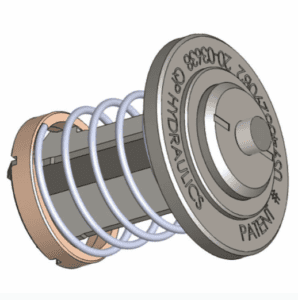
Most hydraulic engineers will spend weeks on pump selection, hours on valve sizing, and real time on line routing. The check valve often gets picked in about 30 seconds. It’s a ball on a spring. What’s there to think about?
Quite a bit, it turns out. The check valve is one of the few components in a hydraulic circuit that directly affects system heat. Get it wrong and you’re fighting an efficiency problem that you can’t easily trace back to a $40 component. Get it right and you’ve improved the thermal performance of the entire system without touching anything else.
What a Check Valve Actually Does to System Heat
Every hydraulic component that creates pressure drop generates heat. Most engineers know this about pumps, valves, and actuators. Fewer apply the same thinking to check valves, partly because check valves are passive and partly because the pressure drop across a well-designed one is low enough that it rarely shows up in early system modeling.
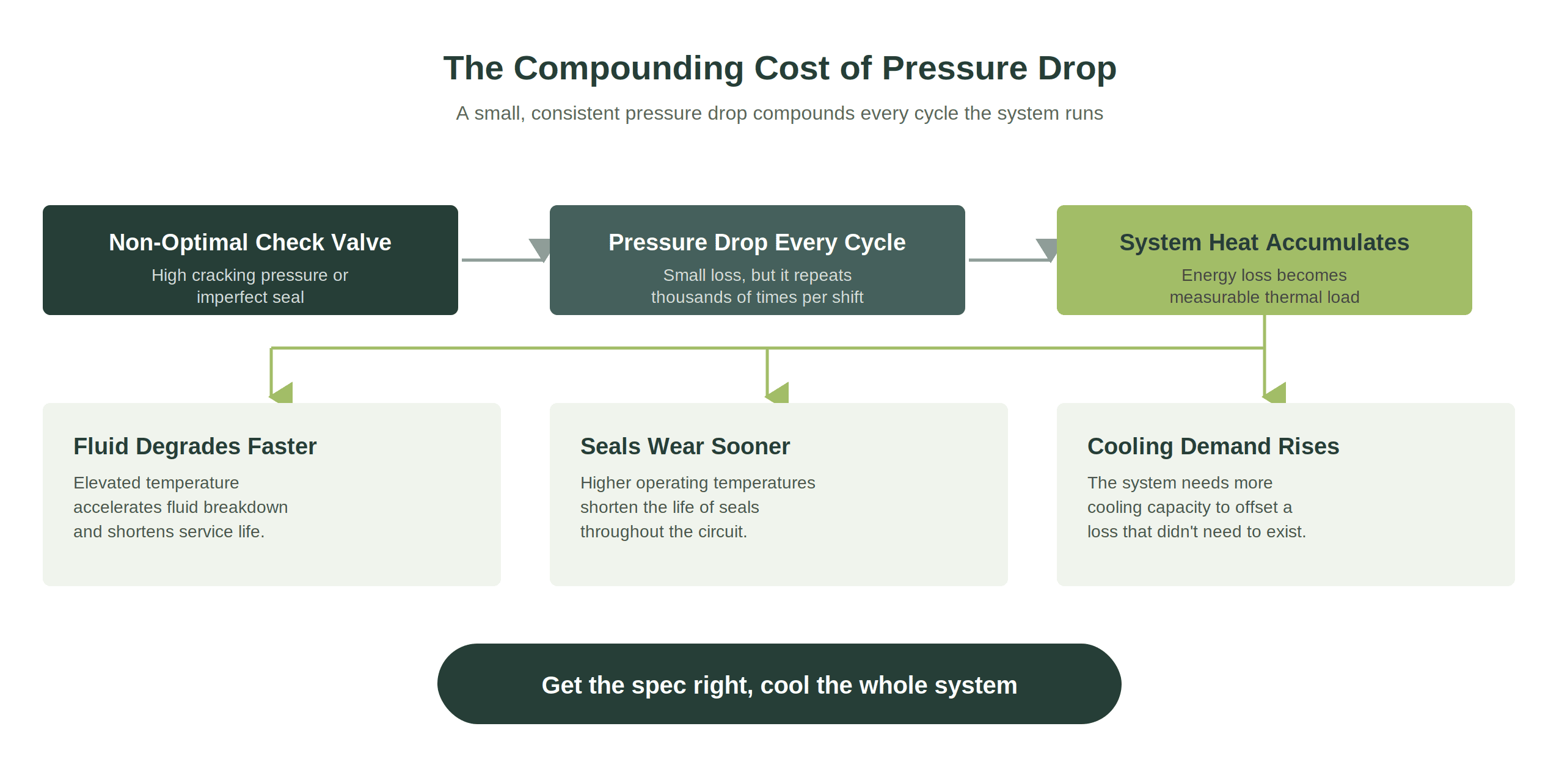
The problem accumulates. A check valve with a higher-than-necessary cracking pressure, or one that doesn’t close cleanly, creates a consistent source of energy loss every cycle the system runs. In a machine that operates for eight to twelve hours a day, that adds up. System temperature rises. Fluid degrades faster. Seals wear sooner. Cooling requirements increase.
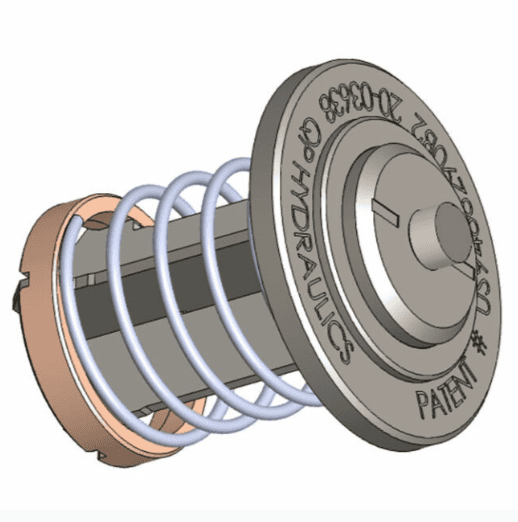
QP’s inline check valves are engineered specifically to minimize pressure drop while maintaining precise control of flow direction. In applications where pressures and flows need tighter management than a standard check valve can provide, a lower-drop, smaller-footprint valve can reduce system heat meaningfully without any other changes to the circuit.
The Misconception: “Dumb Valve, Low Stakes”
The phrase that comes up in conversations with customers is that a check valve is a “dumb valve.” It has one job. Open when pressure is applied in one direction, close when it’s not. There’s nothing to configure, nothing to tune, nothing to optimize.
That’s true of the function. It doesn’t follow that the specification doesn’t matter.
A check valve that opens at the wrong cracking pressure wastes energy on every cycle. One that doesn’t seal cleanly causes backflow that the rest of the circuit has to compensate for. One that’s oversized for the application adds unnecessary weight and takes up space that could be used elsewhere. None of these are catastrophic failures. They’re just quiet, sustained inefficiencies that degrade performance over time and make the system harder to diagnose when something eventually goes wrong.
The counterargument is also true: if you genuinely need a simple ball-on-a-spring check valve for a low-stakes application, QP can supply it. The honest answer is that a standard commodity check valve will be cheaper from a supplier who specializes in high-volume, low-specification parts. QP’s check valves are engineered for applications where the specification actually matters. If yours doesn’t, that’s worth knowing upfront.
When QP’s Check Valves Are the Right Fit
The scenarios where a higher-specification check valve pays off share a few common traits.
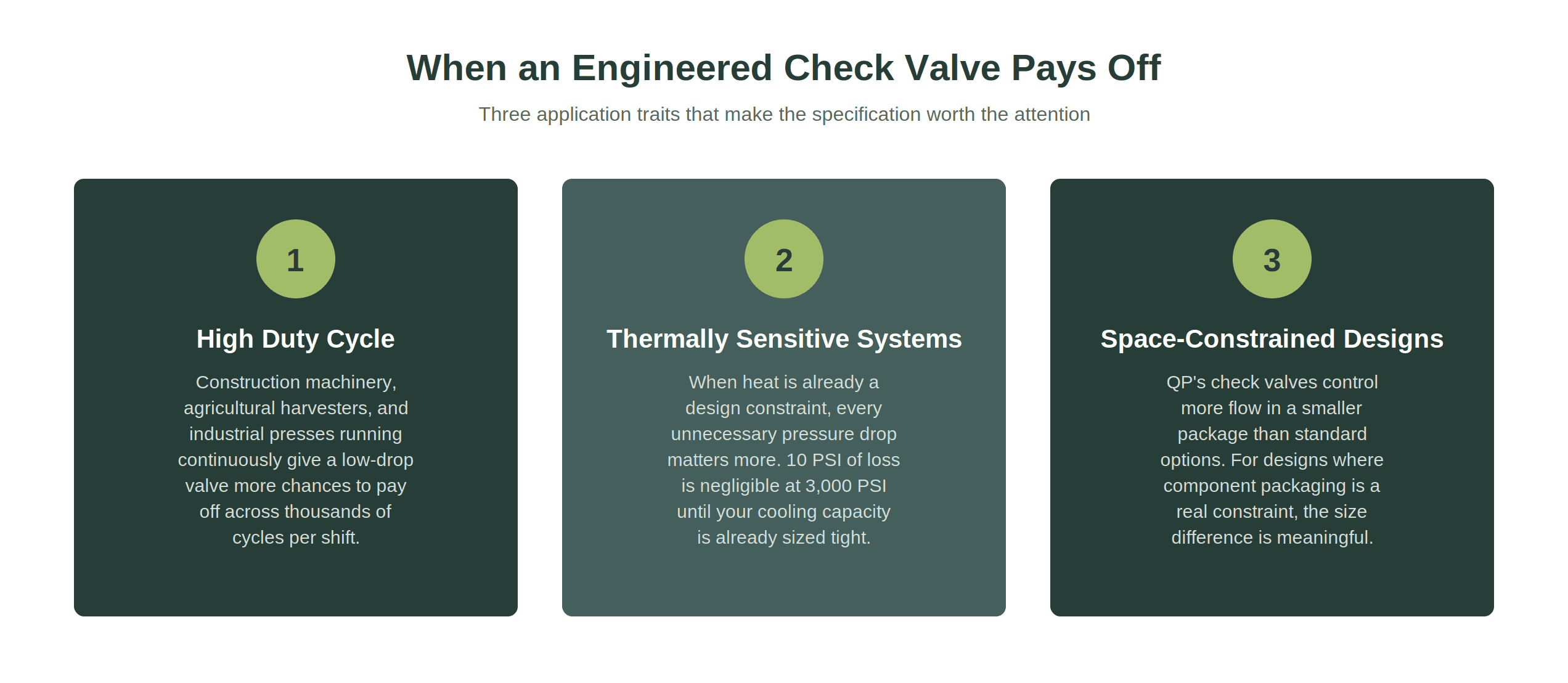
High duty cycle machines are the clearest case. Equipment that runs continuously for extended periods, construction machinery, agricultural harvesters, industrial presses, gives a low-drop check valve more opportunity to return value. The efficiency gain is small per cycle and significant over thousands of cycles per shift.
Thermally sensitive systems are another. Any circuit where heat is already a design constraint benefits from minimizing every unnecessary source of energy loss. A check valve that adds 10 PSI of unnecessary pressure drop in a system running at 3,000 PSI might seem negligible. In a system where the cooling capacity is already sized tight, it isn’t.
Space-constrained applications are the third. QP’s check valves are engineered to control more in a smaller package than standard options. For machine designs where component packaging is a real constraint, the size difference is meaningful.
The Right Question to Ask Before You Specify
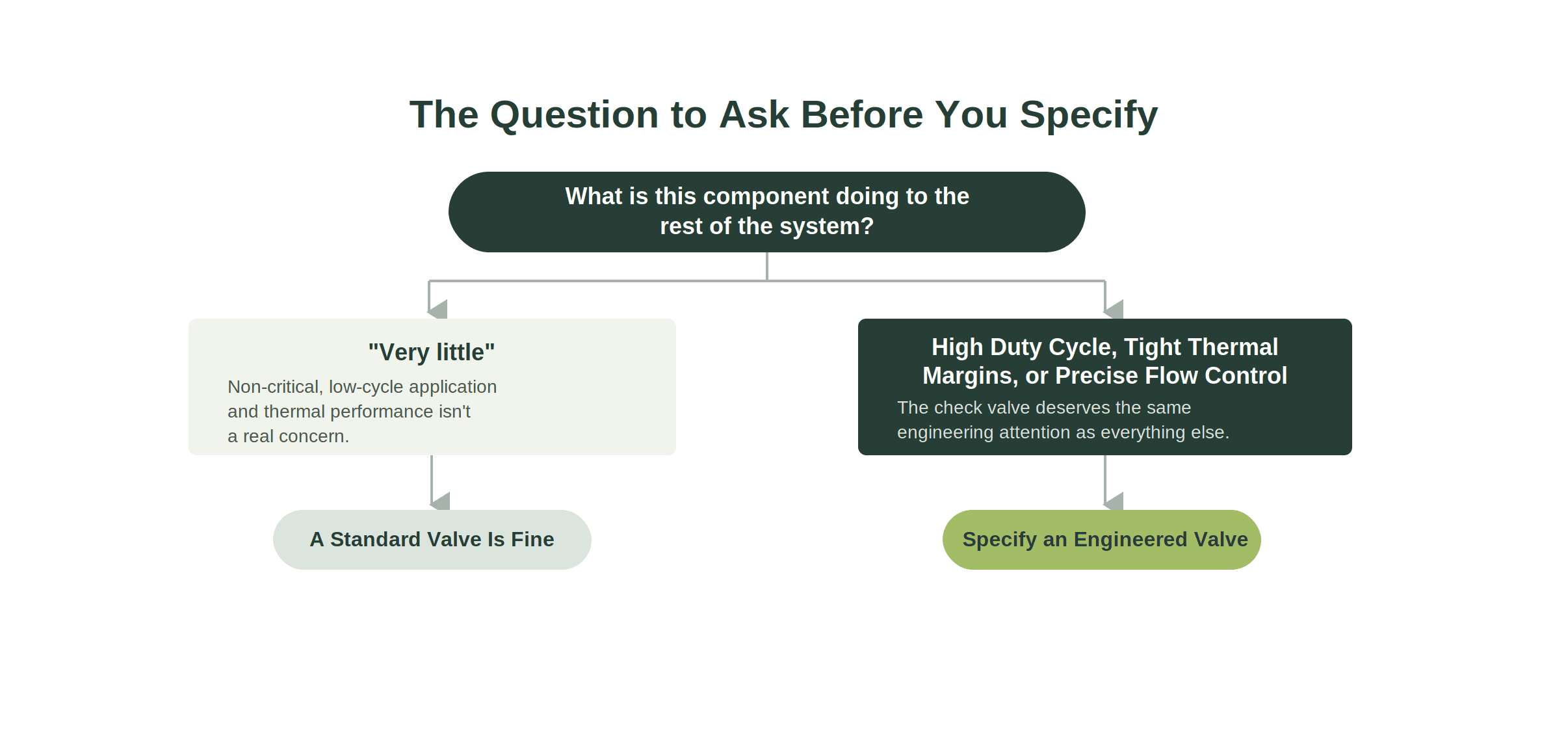
Before selecting a check valve, the question worth asking is not “what’s the cheapest option that meets the minimum spec?” It’s “what is this component actually doing to the rest of the system?”
If the answer is “very little, it’s a low-cycle application and thermal performance isn’t a concern,” then a standard valve is probably the right call. If the answer involves high duty cycles, tight thermal margins, or precise flow control requirements, the check valve deserves the same engineering attention as everything else in the circuit.
QP’s engineering team can work through the application and confirm which direction makes sense. Schedule a discovery call at qphydraulics.com or reach out at (630) 588-0088.